

“Chinese wine tastes like dead mouse”
Peter Farrow, narrator
Bonfire of the Vanities, by Thomas Wolfe


Despite this genetic curse the Chinese have a long history of alcohol consumption as a part of their dietary and ceremonial lives. Indeed, two of the oldest dynastic regimes ended with similar tales of alcoholic excess. The 17th and last ruler of the Xia dynasty, Jie (1600 BC), was said to have ordered the construction of a pool of wine that was big enough to float a boat; and the last ruler of the subsequent Shang Dynasty, Di Xin, also followed the suspect counsel of his mistress and built a similar pool of plonk. Di Xin’s final act of excess brought about the end of the Xin and advent of the Zhou dynasty. Clearly, Oscar Wilde’s famous quip, “everything in moderation, including moderation”, came much too late for naughty Emperors Jie and Di Xin.


UK-based Waitrose offers Chinese wine in its international wine section. Esteemed purveyor of fine wines, Berry Brothers and Rudd, has predicted by 2058 Chinese wine will be as good as that of Bordeaux. China produces more wine than Chile and more grapes are being planted every year. Experts from the around the world advise Chinese vineyards on planting, harvesting and producing wines.


It may soothe the egos of westerners to mock the Chinese as interlopers and carpet-baggers who scarcely understand the value of their latest acquisitions, but frivolous consumption is part of every economic evolution. The Arabs used their petrol-dollars to buy fleets of luxury cars and stables of race horses, while the Russian kleptocracy scooped up most of the Cote D’Azur. Even the daughters of American rail barons married into faded British nobility in the hope of brushing off their dusty heritage and acquiring class. Alas, it didn’t work.


Our time in China has not been wasted on Hunter since, evidently, he has acquired a measure of Chinese entrepreneurialism. When he read the two factoids that (i) Christies auction house smashes all their empty bottles after wine tastings to ensure they are not refilled and (ii) a Chinese recycler was paying as much as $320 for an empty bottle of great vintage Lafite, his mental light bulb was aglow. Hunter proposed selling our many empty bottles on taobao.com, the Chinese eBay.
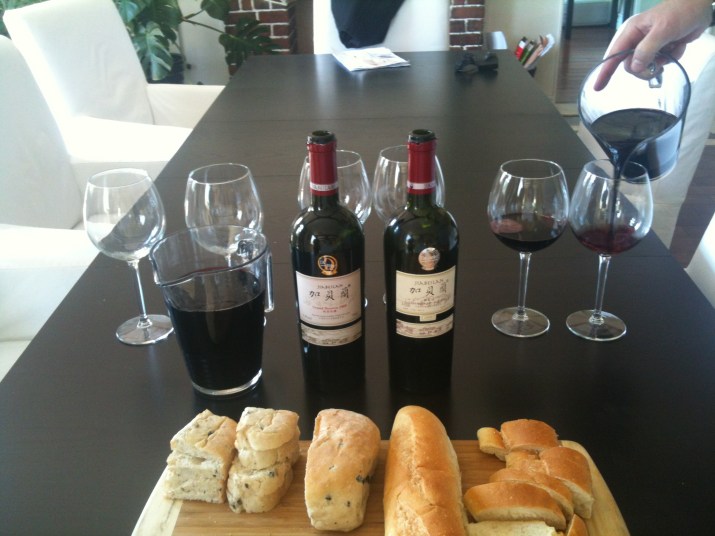
Counterfeiting is merely an early step in an economic process that invariably positions real and competitive Chinese products into the international markets. China has terroir and climate of every combination so, when coupled with the import of foreign technology and talent, a legitimate wine industry will emerge….even if it takes to 2058. Apparently even wine self-sufficiency is part of the Chinese master plan.
P.S. I look forward to a dinner party where we serve Jia Bei Lan 2009 Cabernet; if only we could get our hands on some. Hmmm, that sounds like a challenge! Maybe some braised Mongolian beef short-ribs with Great Wall Cabernet 1998, a wine described by the WSJ as “full bodied, tannic but with a lot of fruit—that could hold its own with Cabernets from other countries.” All that and a bargain at $80 a bottle.